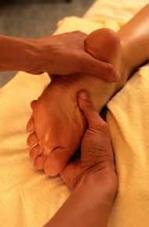
How massage aides athletic performance
All athletes look for an edge that can help them train more effectively, perform better or overcome injuries quickly. Massage can be a very important part of an athletes' regimen.
Date: 07/07/04
Source: AMTA
The last several decades have witnessed a dramatic rise in the level of athletic performance. Advances in training and conditioning techniques are allowing the human body to become a finely tuned machine. The limits of speed, endurance and strength are pushed every day and each year brings new world records. The leap in performance can be attributed to any number of key factors:
- improved equipment;
- enhanced understanding of how nutrition fuels the body;
- enlightened attitudes about psychological aspects of competition;
- scientific advances in the study of body structure and function.
American Massage Therapy Association (AMTA) has been an active participant in the formulation of new performance enhancement techniques. The growing awareness and use of sports massage therapy, a valuable addition to other manual therapies and treatments, has become a key component of the high performance mix, as much a part of an athlete's critical discipline as a carefully monitored diet. AMTA and its National Sports Massage Team (NSMT) are integral parts of the new athletic regimen from sports medicine clinics, to college training rooms, to professional locker rooms, AMTA members are helping athletes work their way to even greater success. What is Therapeutic Massage?
"I would not provide sports medicine services for any major athletic event without massage therapists." -- Marjoirie J. Albohm, MS, ATC Chief Athletic Trainer, 1996 Atlanta Olympic Games Therapeutic massage increasingly is being prescribed by physicians to complement traditional medical treatment for illness, injury and pain as a growing body of research documents its efficacy. Massage doesn't just feel good. It reduces the heart rate and blood pressure, increases blood circulation and lymph flow, reduces muscle tension/spasm, improves range of motion, and helps relieve pain, enhancing medical treatment.
Therapeutic massage involves manipulation of the soft tissue structures of the body. It soothes and calms, and aids in stress reduction; and it may improve the rate at which the body recovers from injury and illness. Working in conjunction with Duke University, researchers at the Touch Research Institute of the University of Miami School of Medicine have measured the body¹s biochemical levels after massage therapy and found a dramatic decrease in the levels of cortisol, norepinephrine and dopamine.
Research also has measured changes in levels of endorphins and serotonin after sports massage, which may reduce pain and contribute to reduced levels of delayed onset muscle soreness. Sports Massage Techniques "I have found that massage therapy can provide a very effective adjunct to more traditional treatment of certain injuries of intercollegiate athletes." -- Bob Grams, MS, ATC Athletic Trainer & Assistant Professor, Seattle Pacific University Each sport and athletic event uses muscle groups in a different way.
Sports massage therapists must be familiar with each muscle, the muscle groups and how they are affected by the specific movements and stresses of each sport. They also are trained in the appropriate uses of hydrotherapy and cryotherapy. Sports massage therapy is often based on Swedish massage and frequently includes the use of one or more of the following techniques: Deep Swedish Massage Muscle-specific applications of the standard effleurage, petrissage, vibration, and tapotement techniques.
Compression Massage Rhythmic compression into muscles used to create a deep hypremia and softening effect in the tissues. It is generally used as a warm-up for deeper, more specific massage work.
Cross-Fiber Massage Friction techniques applied in a general manner to create a stretching and broadening effect in large muscle groups; or on site-specific muscle and connective tissue, deep transverse friction applied to reduce adhesions and to help create strong, flexible repair during the healing process.
Trigger Point/Tender Point Massage Combined positioning and specific finger or thumb pressure into trigger/tender points in muscle and connective tissue, to reduce the hypersensitivity, muscle spasms and referred pain patterns that characterize the point.
Left untreated, such trigger/tender points often lead to restricted and painful movement of entire body regions. Lymphatic Massage Stimulation of specialized lymphatic-drainage pathways, which improves the body¹s removal of edemas and effusion. Added Performance Edge:
The Contributions of Sports Massage Professional sports massage by a qualified AMTA member can provide an athlete with several performance advantages. Regular sports massage can:
- reduce the chance of injury, through proper stretching and event preparation, and through deep tissue massage;
- improve range of motion and muscle flexibility, resulting in improved power and performance;
- shorten recovery time between workouts;
- maximize the supply of nutrients and oxygen through increased blood flow;
- enhance elimination of metabolic by-products of exercise.
Three Areas of Sports Massage Athletic trainers know that keeping an athlete in top physical form requires a regular prevention and maintenance program, as well as on-site treatment before and after an athletic event. And, when strains, sprains, bruises, or other major injuries occur, a variety of treatment modalities may be necessary to speed healing and reduce discomfort.
Sports massage therapy can help certified athletic trainers in all of these areas. Maintenance Massage "Sports massage bridges the gap to optimal performance." -- Curtis Millar Sports Massage Therapist Professional Hockey Team An effective maintenance program is based on the massage therapist's understanding of anatomy and kinesiology, combined with an expert knowledge of which muscles are used in a given sport and which are likely candidates for trouble.
By zeroing in on particular muscle groups and working specific tissues, the sports massage therapist helps the athlete maintain or improve range of motion and muscle flexibility. The overall objective of a maintenance program is to help the athlete reach optimal performance through injury-free training. Event Massage Pre- and post-event massage therapy are tailored for distinct purposes.
Pre-event massage is used as a supplement to an athlete's warm-up to enhance circulation and reduce excess muscle and mental tension prior to competition. It also improves tissue pliability, readying the athlete for top performance. Post-event massage, on the other hand, is geared toward reducing the muscle spasms and metabolic build-up that occur with vigorous exercise.
Various sports massage techniques enhance the body¹s own recovery process, improving the athlete¹s return to high-level training and competition, and reducing the risk of injury. Rehabilitation Massage
"I was a little concerned, because I couldn't really walk well...and my mobility was very, very limited. But two days of electrostim, massaging and heat treatments really loosened things up."
-- Michael Jordan Professional Basketball Player
Even with preventive maintenance, muscles cramp, tear, bruise, and ache. Sports massage can speed healing and reduce discomfort during the rehabilitation process. Soft tissue techniques employed by sports massage therapists are effective in the management of both acute and chronic injuries. For example, adding lymphatic massage to the "standard care" procedure in the acute stage of injury will improve control of secondary, hypoxic injury and enhance edemous fluid removal throughout the healing cycle.
Trigger point techniques reduce the spasms and pain that occur both in the injured and "compensation" muscles. Cross-fiber friction techniques applied during the subacute and maturation phases of healing improve the formation of strong and flexible repair tissue, which is vital in maintaining full pain-free range of motion during rehabilitation.
In all cases, such massage techniques are employed in collaboration with other appropriate medical care. For example, encouraging circulation around a bruise, but not directly on it, through the use of compression, cross-fiber techniques or even long, deep strokes is only used after appropriate medical referral and diagnostics indicate that there are no clots formed in the area which may embolize. Sample of Research Documents
"Having massage therapy skills can tremendously enhance your sports care options."
-- Benny Vaughn ATC, CSCS Atlanta School of Massage
Bibliography
Arkko PJ, Pakarinen AJ, Kari-Koskinen O. Effects of Whole-body Massage on Serum Protein, Electrolyte and Hormone Concentrations, Enzyme Activities and Hematological Parameters. Int J Sports Med.
Ashton J. Holistic Health: In Your Hands. Nurs. Times
Cyriax J. Textbook of Orthopaedic Medicine. Vol 2, Treatment by Manipulation, Massage and Injection. 11th ed. 1984.
Danneskiold-Samsoe B, Christianson E, Anderson RB. Myofascial Pain and the Role of Myoglobin. Scand. J. Rheumatol. (Stockholm).
Degood D. Effect of Massage Therapy and Post-Surgical Outcomes. (Unpublished)
Elkins EC, Herrick JF, Grindlay JH, et al. Effects of Various Procedures on the Flow of Lymph. Arch. Phys. Med.
Ernst E, Matrai A, Magyarosy I, et al. Massages Cause Changes in Blood Fluidity. Physiotherapy.
Fakouri C, Jones P. Relaxation RX: Slow Stroke Back Rub. Journal of Gerontological Nursing.
Field T, Ironson G, Scafidi F, Narocki T, Goncalves A, Pickens J, Fox M, Schanberg S, Kuhn C. Massage Therapy Reduces Anxiety and Enhances EEG Pattern of Alertness and Math Patterns. International Journal of Neuroscience.
Foldi M. Anatomical and Physiological Basis for Physical Therapy of Lymphedema. Experientia.
Ironson G, Field T, Scafidi F, Hashimoto M, Kumar M, Kumar A, Price A, Goncalves A, Burman I, Tetenman C, Tatarca R, Fletcher M. Massage Therapy is Associated with Enhancement of the Immune System¹s Cytotoxic Capacity. International Journal of Neuroscience.
Kaard B, Tostinbo O. Increase of Plasma Beta Endorphins in a Connective Tissue Massage. General Pharmacology.
Korr IM. Proprioceptors and Somatic Dysfunction. J AOA.
MacGregor M. Manual Treatment at the Knee. Physiotherapy.
Olson, M. Therapeutic Touch and Response to Stress. (Unpublished)
Smith LL, Keating MN, Holbert D, Spratt DJ, McCammon MR, Smith SS, Israel RG. The Effects of Athletic Massage on Delayed Onset Muscle Soreness, Creatine Kinase, and Neutrophil Count: A Preliminary Report. J Orthop. Sports Phys. Ther.
Sunshine W, Field T, Quintino O, Fierro K, Kuhn C, Burman I, Schanberg S. Fibromyalgia Benefits from Massage Therapy and Transcutaneous Electrical Stimulation. Journal of Clinical Rheumatology.
Weintraub M. Shiatsu, Swedish Muscle Massage and Trigger Point Suppression in Spinal Pain Syndrome. Amer. Journal of Pain Management.
Yackzan L, Adams C, Francis KT. The Effects of Ice Massage on Delayed Muscle Soreness. AM J Sports Med.
Yamazaki Z, Fujimori Y, Wada T, et al. Admittance Plethysmographic Evaluation of Undulatory Massage for the Edematous Limb. Lymphology.
|